Scrap Gold vs Bullion Value: What pays more in 2026
You searched for this because something is off. Maybe a dealer quoted you a number that felt too low. Whatever brought you here, the answer to most of your confusion comes down to one thing: not all gold is priced the same way. Scrap gold and bullion follow completely different valuation rules. Walk into any dealer without knowing the difference, and you’re leaving money on the table.
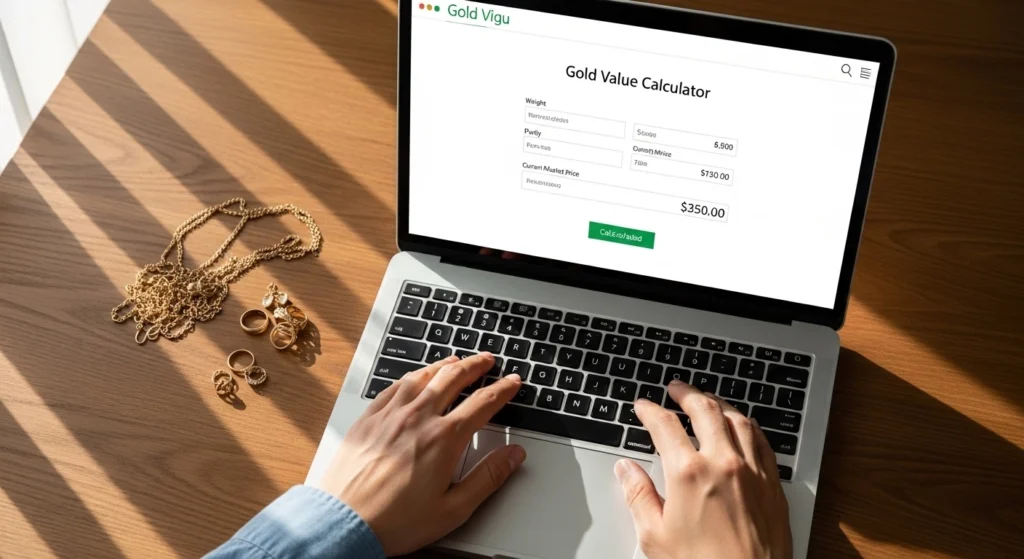
This guide gives you the full picture, including how 14k and 18k gold scrap value is calculated, what drives bullion values up over time, and how to use a scrap gold value calculator before you ever pick up the phone.
Find the exact melt worth of your items right now using our main scrap gold calculator.
What Actually Determines Scrap Gold Value?
Scrap gold value comes down to two things.
- Weight
- Purity
The design of your ring doesn’t matter. The brand name on the clasp of that necklace means nothing to a refiner. What matters is how many grams of actual gold are sitting inside that piece. A buyer looks at your item and sees raw metal content that will eventually get melted down and refined. Everything else is noise.
The basic formula works like this:
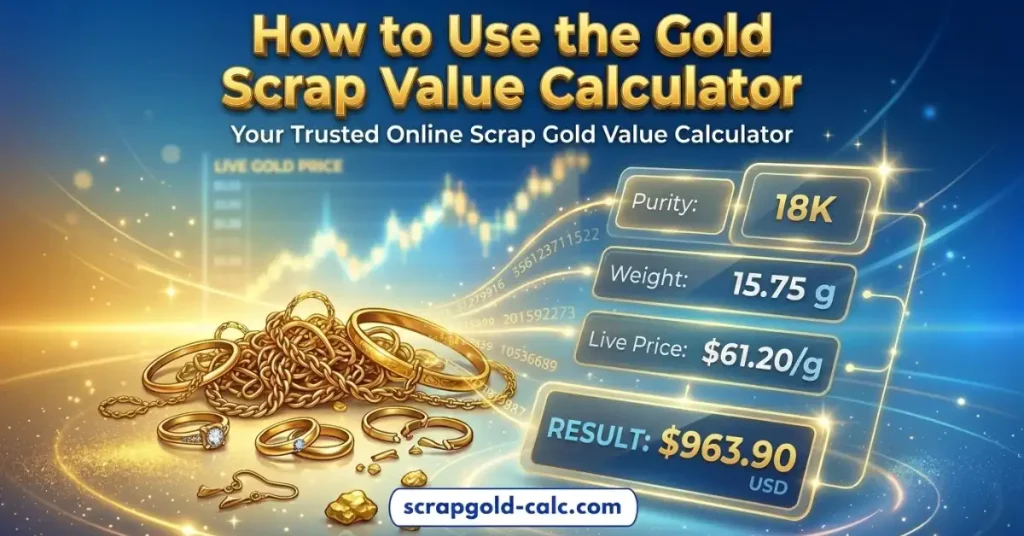
Scrap Value = (Karat ÷ 24) × Weight in grams × Current spot price per gram
So if you have a 14k gold ring that weighs 5 grams and the spot price is $100 per gram, the raw metal value is roughly $29.15. That’s the ceiling, not the floor. What you actually receive is a percentage of that figure after the dealer accounts for refining costs and their own margin.
Most reputable buyers pay somewhere between 70% and 85% of the raw metal value. Anything below 65% should raise a flag. The gold scrap calculator lets you run these numbers live before you come in, so you already know your baseline.
Bullion is usually 24k, but scrap varies wildly; learn how to identify your item’s purity with our gold scrap karat guide.
Why the Spot Price Is Not What You Receive
Here’s the part most sellers don’t understand until they’re standing at the counter. The spot price you see on a financial website is the wholesale price for pure 24k gold traded in massive institutional volumes. You’re not selling pure gold. You’re selling a 14k ring with a bit of copper and zinc mixed in, plus a small stone setting that gets deducted from the melt weight.
The gap between spot price and your actual payout covers three things.
- First, the cost of refining your item back into pure gold.
- Second, the dealer’s operating margin.
- Third, any deductions for non-gold components in mixed pieces.
Scrap Value of 14k Gold Per Gram: The Numbers
14k gold is 58.3% pure gold. It’s the most common karat in American jewellery. Most people selling scrap gold are working with 14k pieces, which means this number matters more than any other.
At current gold prices, the raw scrap value per gram of 14k gold is considerably higher than it was even two years ago. Here’s a reference table based on different spot price levels:
Spot Price (per gram) | 14k Purity Factor | Raw Metal Value | Estimated Payout at 75% |
$90 | 58.3% | $52.47 | $39.35 |
$100 | 58.3% | $58.30 | $43.73 |
$110 | 58.3% | $64.13 | $48.10 |
$120 | 58.3% | $69.96 | $52.47 |
Check Gold’s live pricing before your visit. The spot price updates throughout the trading day, and the difference between a morning and afternoon quote can be meaningful on larger lots.
What Affects Your 14k Payout Beyond the Spot Price
A few things can push your payout up or down, even when the karat and weight are the same.
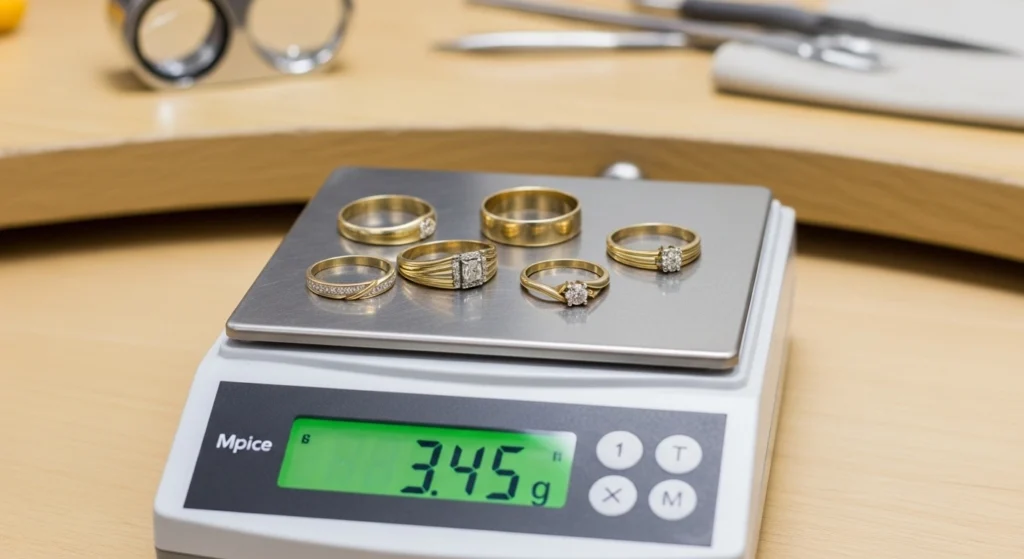
Condition of the piece matters less than you’d think for scrap, but heavily soldered items or pieces with significant non-gold repairs can reduce the effective gold content. Stones and settings get deducted from the melt weight because they don’t contribute to gold content. A ring with a large centre stone will weigh less in actual gold than it appears to.
The dealer testing method also plays a role. In-house electronic testing and acid testing both give accurate readings, but sellers should always watch the process.
Keep in mind that standard bullion pricing does not apply to items carrying a gold filled scrap value.
Gold Bullion Value: How It's Priced and Why It's Different
Scrap gold value is a calculation. Bullion value is a market price. That’s the fundamental difference, and it changes everything about how you buy, hold, or sell.
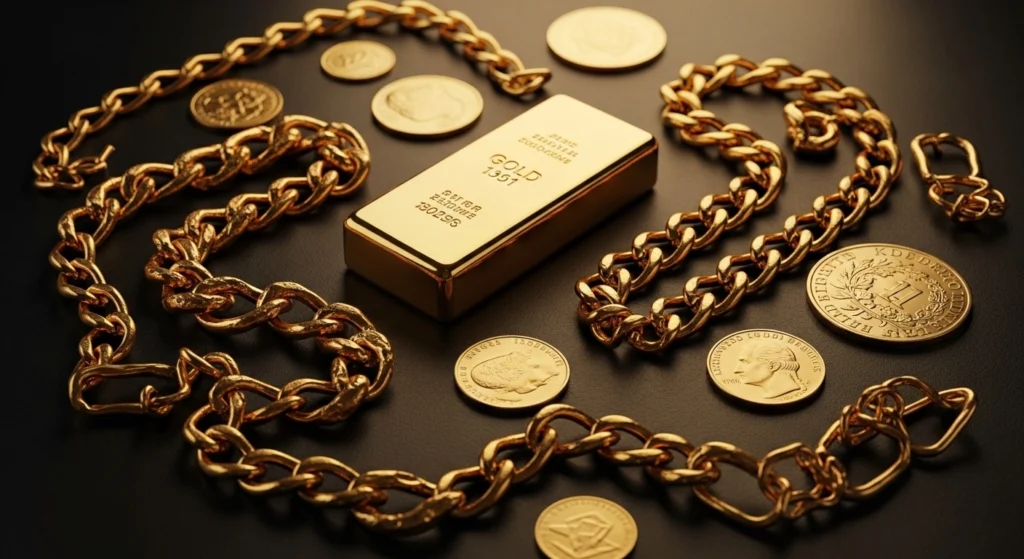
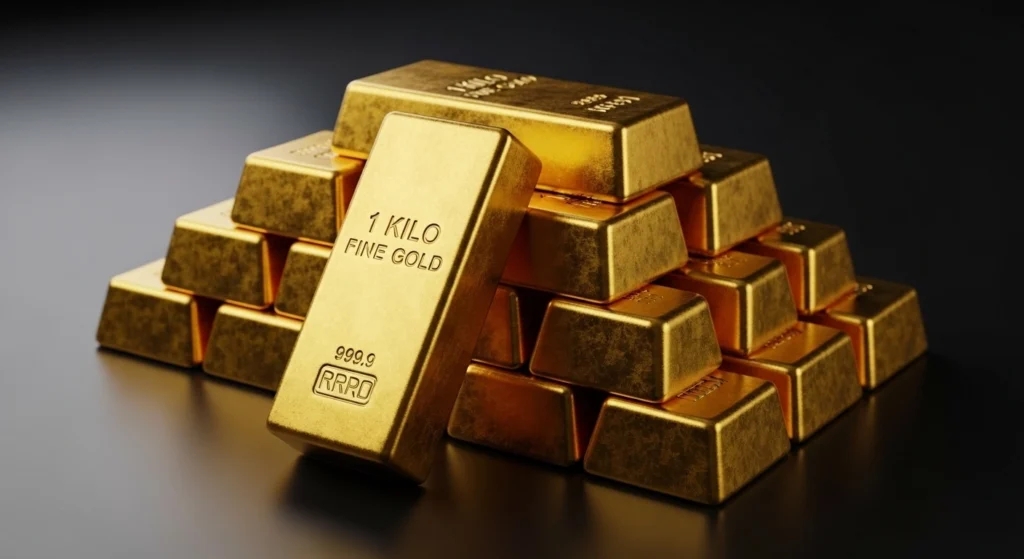
Gold bars and coins produced by recognized mints carry a guaranteed weight and purity. There’s no testing required. No refining deduction. A 1 oz gold bar stamped 99.99% pure is exactly that, and the buyer doesn’t need to question it. The documentation does the work.
Gold bullion value is essentially the spot price plus a minting premium. The minting premium covers the cost of producing a standardised, certified product. It’s the price of certainty.
When you sell bullion back, that premium partially transfers. Bullion resale prices typically sit much closer to the spot price compared to scrap payouts. A seller returning bullion to a reputable dealer will usually receive 95–100% of spot. A seller returning scrap receives 70–85% of the metal value after purity deductions. That gap is significant.
Spot Price vs. Premium: The Actual Cost Breakdown
Every bullion purchase has two components:
The spot price is the global market price for one troy ounce of pure gold at that exact moment. It moves constantly during trading hours and serves as the universal reference point.
The mint premium sits on top of spot and varies by product. Government-minted coins like American Gold Eagles carry a higher premium than plain bars because of their legal tender status and global recognition. Larger bars carry lower premiums per ounce because the production cost per unit is lower.
Scrap Value of 18k Gold Per Gram: More Purity, More Return
18k gold is 75% pure. Same weight, more gold. It’s straightforward math, but sellers consistently underestimate how much more an 18k piece returns compared to 14k.
The difference is not trivial. On a 10-gram piece, the gap between 14k and 18k payout can be anywhere from $12 to $20 per gram, depending on current gold scrap prices. On a larger lot, that adds up fast.
Here’s a full karat comparison at a $100 per gram spot price:
Karat | Purity % | Raw Value per Gram | Estimated Payout at 75% |
10k | 41.7% | $41.70 | $31.28 |
14k | 58.3% | $58.30 | $43.73 |
18k | 75.0% | $75.00 | $56.25 |
22k | 91.7% | $91.70 | $68.78 |
24k | 99.9% | $99.90 | $74.93 |
The gold scrap karat guide can help you find markings on your jewellery and tell you exactly where you land on this table. Most pieces carry a stamp inside the band or on the clasp. Knowing your karat before walking in puts you in a stronger position during the conversation. Once you know what type of metal you have, read how to use gold scrap calculator for a precise market estimate.
What the Calculator Result Doesn't Show You
A few things fall outside what any online tool can capture.
Mixed-metal pieces, items with stones, or jewellery that’s been heavily repaired all require physical assessment. A chain with a steel clasp, for example, needs that clasp’s weight removed before the calculation means anything. Pieces with solder repairs may contain lower-purity filler that dilutes the overall melt value.
The calculator gives you a strong benchmark.
Does Gold Bullion Increase in Value Over Time?
Gold bullion does not pay dividends. It does not compound. It does not behave like a stock or a rental property. What it does is preserve purchasing power over long time horizons and rise sharply during periods of inflation, currency weakness, or geopolitical instability.
Gold was trading around $280 per ounce at the start of 2000. By early 2026, it crossed well above $3,000 per ounce. That’s not a straight line. There were years of flat performance and a few steep corrections. But the long-term trend reflects what gold does well: it holds value when paper currency doesn’t.
The investors who benefited most from bullion were the ones who held through volatility rather than reacting to it.
Best Value Gold Bullion Formats for Long-Term Holding
Not all bullion products deliver equal value per dollar invested. Here’s how the main formats compare:
- Large bars (1 oz and above) carry the lowest per-ounce premiums and are ideal for investors committing larger amounts. They’re efficient but less liquid in small increments.
- Government-minted coins carry higher premiums but are recognised globally and easier to sell quickly in any quantity.
- Fractional coins (1/4 oz, 1/10 oz) carry the highest premiums per ounce but lower absolute buy-in costs. They suit investors starting small or those who want flexibility in selling portions of their holdings.
The best value gold bullion format depends on your investment size and how quickly you might need to access that value.
Checking the Current Value of Gold Bullion in Real Time
Gold prices update throughout the trading day. Before any call or visit, check the current value of gold bullion to anchor your expectations to today’s market rather than last week’s number.
Scrap Gold vs. Bullion Value: Direct Comparison
Factor | Scrap Gold | Gold Bullion |
Pricing basis | Purity + weight minus margin | Spot price plus mint premium |
Typical payout vs spot | 70–85% of the metal value | 95–100% of spot on resale |
Liquidity | Local buyers and refineries | Global market, any reputable dealer |
Documentation | None required | Certificate of authenticity included |
Best suited for | Selling unwanted or broken jewellery | Long-term holding and investment |
Storage needs | Minimal | Secure vault or safe deposit recommended |
Price transparency | Varies by dealer | Consistent and market-driven |
Testing required at sale | Yes, always | No, certification handles it |
When Gold Bullion Is the Smarter Buy
If your goal is to store value rather than convert it, bullion is the more practical choice. It’s standardised, traceable, globally recognised, and priced with full transparency. You always know what you own and what it’s worth.
Bullion suits investors who want a hedge against inflation or currency risk. It suits people building a long-term store of value outside of paper assets. It suits buyers who want to know their gold can be resold anywhere, not just to the nearest local buyer.
Similarly, commemorative coins or bars that only have a gold platted scrap value are treated very differently by refiners than pure bullion.
Frequently Asked Questions
What is the scrap value of 14k gold per gram right now?
The scrap value of 14k gold shifts with the spot price every trading day. At 58.3% purity, the raw metal value per gram equals the current spot price multiplied by 0.583. Realistic dealer payouts typically range from 70% to 85% of that figure.
How is scrap gold value calculated?
Three inputs drive the calculation: the current spot price per gram, the purity of the gold as a decimal (14k equals 0.583, 18k equals 0.75), and the total gram weight of your piece. Multiply all three to get the raw metal value.
Is bullion worth more than scrap gold per gram?
Bullion trades much closer to the global spot price than scrap gold does. Scrap always carries a refining deduction and dealer margin that bullion doesn’t face at resale.
Does gold bullion go up in value over time?
Bullion rises and falls with the global spot price, which responds to inflation, currency strength, central bank policy, and market demand.
What is the scrap value of 18k gold per gram?
18k gold is 75% pure. At a spot price of $100 per gram, the raw metal value sits at $75 per gram. After a standard dealer margin, a realistic payout lands between $52 and $64 per gram, depending on the buyer and the condition of the piece.
How do I know if my gold jewellery is 14k or 18k?
Look for a hallmark stamp inside the band or near the clasp. The stamp 585 indicates 14k gold. The stamp 750 indicates 18k gold. European pieces may use decimal versions of these numbers.
Where can I find a reliable scrap gold value calculator?
Our live gold scrap calculator is updated with real-time spot prices. Enter your karat and gram weight to get a working estimate before your visit. It gives you a solid baseline so the conversation with a dealer starts on solid ground.