Gold Plated Scrap: What It Is Actually Worth and How to Sell It
You pulled out a box of old jewellery, some tarnished pins, maybe a few trophies from the garage. Everything looks gold. But is it actually worth anything? That question is more common than you think, and most people either throw these items away or walk into a buyer completely unprepared. Both are mistakes that cost real money.
The frustrating part is that the internet gives you two extreme answers. Either “gold-plated scrap is worthless, don’t bother” or “you’re sitting on a goldmine.” Neither is fully accurate. The real answer depends on what you have, how much of it you have, and where you take it.
This guide breaks it all down in plain terms. By the end, you will know exactly what your gold-plated scrap is worth, how to identify it, how to sort it, and where to sell it without getting lowballed. If you want to skip ahead and run the numbers right now, our gold scrap calculator gives you an instant estimate before you talk to anyone.
While significantly less valuable, you can still track current market trends for these items on the scrap gold calculator.
Does Gold-Plated Jewellery Have Any Scrap Value?
Yes, but the honest answer comes with conditions most buyers won’t tell you upfront.
A single gold-plated ring or pendant? The gold content is so small that no refiner will pay meaningful money for it alone. The processing cost to separate that thin gold layer from the base metal would exceed what the recovered gold is worth. That’s the reality.
But here’s where it changes. Volume solves the math problem. Fifty pieces, one hundred pieces, three hundred pieces and suddenly the recoverable gold adds up to something real. Refiners deal in bulk, and when you bring a substantial lot of gold-plated material, the economics shift in your favour.
The Micron Problem: Why Thickness Decides Everything
The standard gold plating thickness sits between 0.5 and 2.5 microns. To put that in perspective, a single sheet of printer paper is about 100 microns thick. You are working with an incredibly thin layer of gold.
Items marked HGE (Heavy Gold Electroplate) carry a thicker layer, sometimes up to 2.5 microns or beyond. These are worth more per piece than lightly plated items. When you’re sorting your scrap, pull out anything marked HGE and keep it separate. It represents better recovery potential, and refiners will price it differently.
The gold-plated jewellery scrap value is calculated based on the recoverable gold weight after processing, not the total weight of the item. The base metal makes up the vast majority of that total weight.
Processing Costs vs. Recovery Value
Refiners use chemical methods to strip and recover gold from plated items. The most common method involves acids that dissolve the gold layer and allow it to be separated and recovered. This process has a real cost attached to it, including chemicals, labour, equipment, and disposal of waste materials.
That processing cost is why not every refiner accepts gold-plated scrap. Some have minimum weight requirements. Some only take it if it’s pre-sorted by material type. Before you haul a box of mixed plated scrap somewhere, call ahead and ask about their minimum lot requirements.
What Exactly Is Gold Plated Scrap?
Gold-plated items are base metal objects, usually copper or silver, with a very thin layer of real gold applied over the surface. That gold layer gets applied through a chemical or electrochemical process. The thickness of that layer typically ranges from 0.5 to 2.5 microns, though some heavier plated items go a bit thicker.
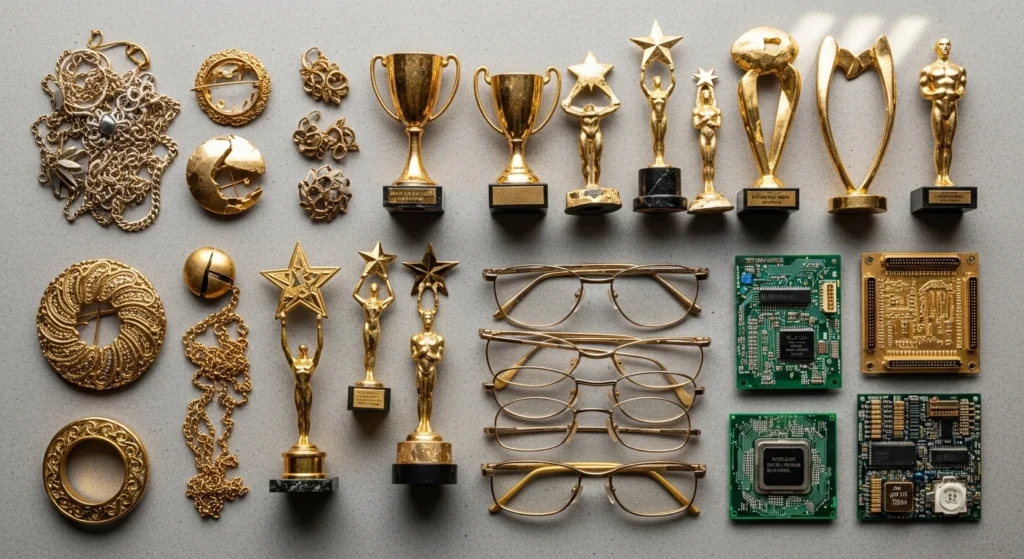
When those items age, get damaged, or simply stop being useful, they become gold-plated scrap. That includes broken jewellery, old pins, worn-out eyeglass frames, vintage electronics, and even household decorative pieces.
The key thing to understand is that gold plating contains real gold. Not much per piece, but real gold nonetheless. And that matters.
Gold Plated vs. Gold Filled vs. Solid Gold: The Difference That Changes Your Payout
This is the comparison that most sellers get wrong. Treating all three the same is exactly why people walk away with less money than they should.
Type | Gold Content | Typical Hallmark | Scrap Value Tier | Refining Complexity |
Gold Plated | Less than 0.05% by weight | GP, GE, HGE, RGP | Low (volume dependent) | High cost relative to yield |
Gold Filled | 5% or more by weight (legally required) | GF, 1/20 14K GF | Medium to High | Moderate |
Solid Gold | 41.7% to 99.9%, depending on karat | 10K, 14K, 18K, 24K | High | Straightforward |
Gold-filled scrap is a completely different product from gold-plated scrap. If you have both in your collection, separate them before you talk to any buyer. You will get a much better return on the filled pieces, and grouping them together often means the buyer prices the whole lot as plated. Our guide on gold-filled scrap explains exactly how to tell them apart and what each pays.
Plated items have a very thin electroplated layer, making their melt worth vastly different from items with a gold filled scrap value.
Why So Much Gold-Plated Material Exists
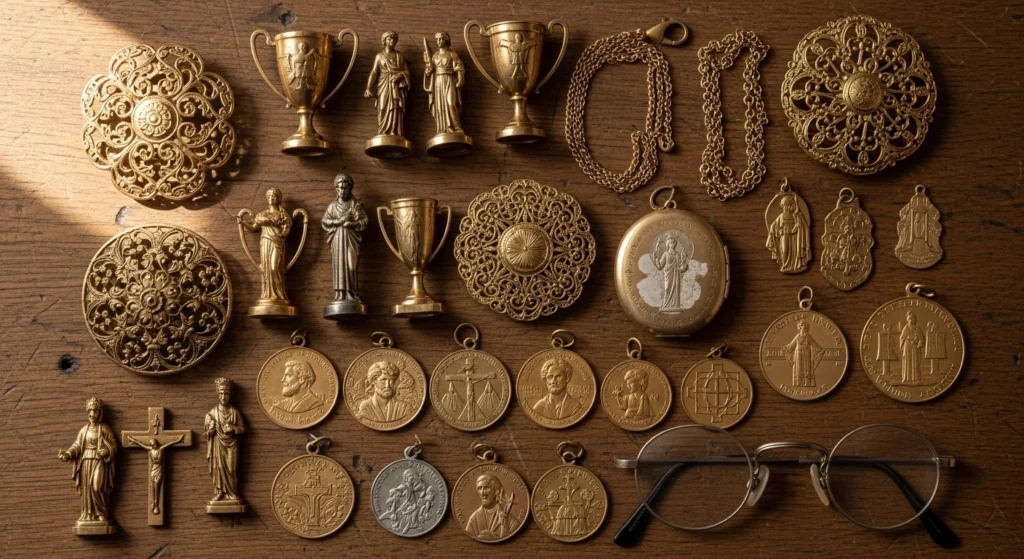
Between the 1940s and the 1990s, gold was significantly cheaper than it is today. Manufacturers used thin gold plating on everyday items without a second thought. Costume jewellery, award trophies, cutlery, decorative pins, religious medals, light fixtures, and early electronics all got the gold treatment. Nobody was thinking about scrap value back then. They were thinking about making affordable products that looked premium.
That era left behind enormous quantities of gold-plated material sitting in attics, antique shops, estate sales, and thrift stores. Most of it gets overlooked. That is actually good news for anyone who knows what to look for.
Unlike cheap plated costume jewelry, medical items like dental gold scrap are usually high-karat solid alloys and hold much more intrinsic value.
Types of Gold-Plated Scrap Worth Collecting
Not all gold plated scrap is created equal. Some categories are much more practical to collect and sell than others.
Costume Jewellery and Fashion Pieces
Old brooches, rings, necklaces, charm bracelets, and earrings from the mid-twentieth century are among the most commonly found gold-plated scrap. Estate sales, antique markets, and thrift stores are reliable sources. Focus on pieces with visible GP or HGE stamps.
Gold-Plated Pins, Brooches, and Findings
Gold-plated pins scrap is a surprisingly productive category. Enamel pins, military badges, club pins, and lapel brooches from the 1950s through the 1980s very commonly had gold plating. Jewellery findings, meaning clasps, jump rings, ear wires, and connectors, sold in bulk to jewellers, also frequently carry gold plating.
Eyeglass Frames
Older eyeglass frames, particularly those made before the 1980s, are often gold-filled rather than just plated. That’s an important distinction that directly affects value. If you’re building a lot of frames, sort them. Frames marked 1/10 12K GF or similar are gold-filled and worth significantly more per gram than standard plated frames.
Trophies, Plaques, and Awards
Vintage trophies and award plaques from the 1940s through the 1970s frequently carry gold plating on their decorative elements. Individual pieces have low scrap value, but collecting these in bulk from estate sales or sports organisations clearing out old storage can build a worthwhile lot quickly.
Religious Medals and Commemorative Items
Saints’ medals, Stars of David, commemorative coins, and religious jewellery from multiple traditions were commonly produced with gold plating. These are easy to find at estate sales and second-hand markets, often priced very low because sellers assume they have no value.
Vintage Electronics and Circuit Components
Transistor radios, relay switches, connector pins, and early circuit boards from the 1950s through the 1970s contain gold contacts and plated components. This category overlaps with e-scrap and requires more sorting, but the gold content per pound can be meaningful when you accumulate enough.
Household Items and Decorative Pieces
Old serving trays, cutlery, light fixture components, and decorative frames were sometimes gold-plated, especially higher-end household goods from the early to mid-twentieth century. Be careful here because many items from this era are only “gold-toned,” meaning a yellow-tinted varnish or lacquer with no actual gold content.
If an item has no hallmark and shows no base metal wear, it may be gold-toned rather than plated. Professional testing is the only reliable way to confirm.
How to Identify Gold-Plated Items Before You Sell
Knowing what you have before walking into a buyer’s shop puts you in a completely different negotiating position. Here’s how to properly identify gold-plated scrap.
Hallmarks and Stamps to Look For
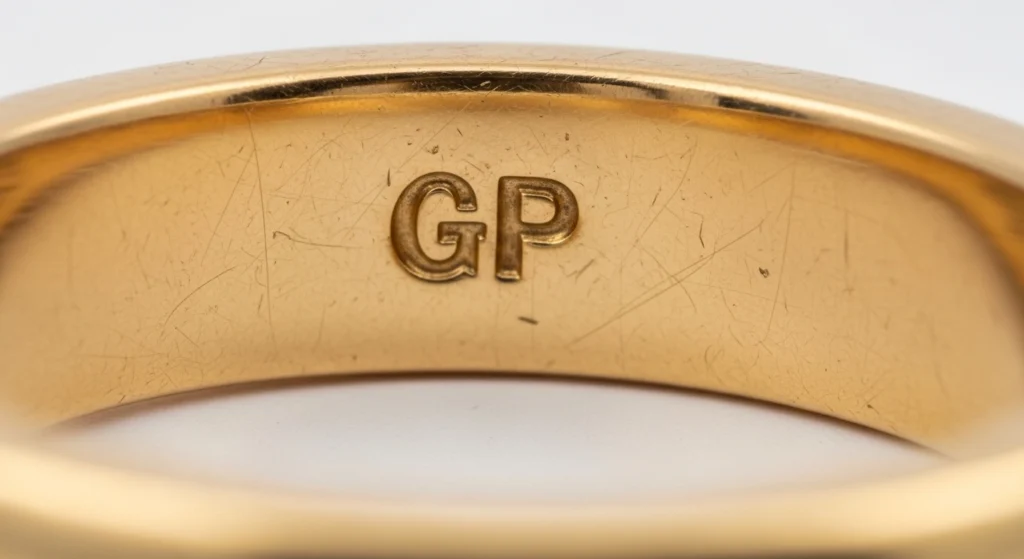
Most gold-plated items carry a small stamp, usually in a spot that isn’t visible during normal wear. On jewellery, check the clasp, the inside of a ring band, or the back of a pendant. You may need a loupe or magnifying glass.
Common stamps on gold-plated items:
- GP: Gold Plated
- GE: Gold Electroplate
- HGE: Heavy Gold Electroplate
- RGP: Rolled Gold Plate
None of these means the item is solid gold. But they do confirm gold is present and that it’s worth keeping for your scrap lot.
Visual Signs of Gold Plating
Plating wears down over time. Pay attention to:
- Copper or silver tones showing through at the edges or high-contact points
- Colour inconsistency across the surface
- A slightly yellowish but dull appearance rather than a rich gold colour
- Tarnish or discolouration at friction points
These are signs the gold layer has worn through, which also tells you the base metal type. Copper showing through means copper base. Silver tones indicate a silver base, which carries its own secondary scrap value.
How to Measure Karats on Gold-Plated Items
This is where most people get confused, and it’s worth spending a moment here because the standard karat system works differently for plated scrap than it does for solid gold pieces.
For solid gold, karatage indicates the gold purity of the entire item. 14K solid gold is 58.5% gold throughout. That’s straightforward. For plated items, karat only describes the purity of the plating layer itself, not the whole piece. A 24K gold-plated item has a very pure but extremely thin gold layer over a base metal core. The total gold content by weight is still tiny.
To accurately measure recoverable gold in plated scrap, you need professional testing. Our gold karat guide covers the main testing methods in detail, but here’s a quick breakdown:
- XRF (X-ray fluorescence) testing is the most accurate non-destructive method. It reads the gold content directly through the surface layer. Most professional buyers use this.
- Acid testing works for solid gold but is unreliable on plated items because the acid only contacts the plating surface, not the base metal underneath.
- Fire assay is the most accurate method overall, but requires melting the material. Refiners use this for settlement on large lots.
Don’t rely on visual checks or basic acid tests to value your plated scrap lot. Get it tested properly.
Gold Plated Scrap Value: What Are the Real Numbers?
Let’s talk about actual value. The numbers will vary with spot gold prices, but the framework remains the same.
How Scrap Gold Plated Prices Are Calculated
The formula refiners use is straightforward:
Total weight of lot x estimated gold content percentage x current spot gold price, minus refining fees
For standard gold-plated items (0.5 to 1 micron thickness), recoverable gold typically represents less than 0.05% of the total item weight. For heavy gold electroplate (HGE) items, recoverable content can run slightly higher.
At current gold prices, a kilogram of mixed standard gold-plated jewellery scrap might yield anywhere from a few dollars to around twenty or thirty dollars, depending on plating thickness and base metal composition. Heavy-plated lots can yield more.
Scrap Category | Approx. Gold Content | Estimated Value per kg (standard lot) | Notes |
Light gold-plated jewellery | Under 0.05% | Low range | High processing cost relative to yield |
Heavy gold electroplate (HGE) | 0.05% to 0.1% | Low to medium range | Better return per kg than a light plate |
Gold-filled jewellery/frames | 5% or more | Significantly higher | Treat as a separate category entirely |
Gold-plated electronics/contacts | Varies widely | Medium range if sorted | Contact density matters significantly |
For specific figures based on today’s spot price, our gold scrap calculator runs the numbers with current market data. That’s the fastest way to get a realistic estimate before you meet with a buyer.
How to Use a Gold Scrap Calculator for Plated Items
Our ” How to Use Gold Scrap Calculator” guide walks through the full process, but for plated scrap specifically:
- Enter the total weight of your lot in grams
- Select “gold plated” as the material type
- Enter the plating grade if known (standard, HGE, or unknown)
- The calculator applies current spot gold prices and estimated recovery rates
- Review the estimated return range before factoring in refining fees
Keep in mind the output is an estimate. Actual settlement from a refiner will depend on their assay results, which are the authoritative numbers for your specific lot.
Gold Plated Scrap vs. Bullion Value
It’s worth understanding why plated scrap settles so far below gold bullion prices. Our gold scrap vs bullion value resource covers this in depth, but the short version is that scrap value reflects the recoverable metal after processing costs are deducted. Bullion is already refined, pure metal ready for trade. The processing cost gap between raw scrap and finished bullion is real, and refiners account for it in their pricing.
Frequently Asked Questions
Can you scrap gold-plated jewellery?
Yes. Gold-plated jewellery contains real gold and can be scrapped. Individual pieces have minimal value, but larger lots can return meaningful amounts. Volume is the key factor.
Is gold-plated jewellery worth anything at a pawn shop?
Most pawn shops won’t pay significant money for gold-plated items because the gold content per piece is too low for their model. A specialist precious metal buyer or refiner is a better option for bulk plated scrap.
How much gold is actually in gold-plated items?
Standard gold-plated items contain less than 0.05% gold by weight. HGE items run slightly higher. The plating layer is measured in microns, so the actual gold is a very small fraction of the total item weight.
What is the difference between gold plated and gold-filled scrap?
Gold-filled items legally contain at least 5% gold by weight, bonded to the base metal in a thick layer. Gold-plated items have a thin electrochemical coating that’s a fraction of that. Gold-filled scrap consistently pays more and should always be kept separate from plated material.
How do I know if my lot is worth taking to a refiner?
A useful starting point is running your lot weight through our gold scrap calculator to estimate the return. If your lot is under the threshold, a local buyer or online sale may be more practical.
What are scrap gold-plated prices per gram?
Scrap gold-plated prices per gram fluctuate with the gold spot price. Because recovery rates are low on plated material, the per-gram payout is a fraction of what solid gold brings.