Gold-filled Scrap Calculator: What Is Your Old Jewellery Actually Worth?
There is a stack of jewelry that you have been storing in a box. These could be broken pieces, earrings or a gold-filled pocket watch which were gifts from the past. You know for sure that there is gold in all these. However, you do not know the monetary value of this jewelry, its buyer or whether you can sell it for scrap at all. This ignorance is the reason why you would like to have a gold-filled scrap calculator.
With this page, you will be able to get the current value of your gold-filled objects with the help of a working calculator on this page. All you need is to mention the karat, the gold-to-brass ratio, and the weight in grams.
Even items that aren’t solid alloy can be evaluated using the settings on our main scrap gold calculator.
What Is Gold-filled Scrap?
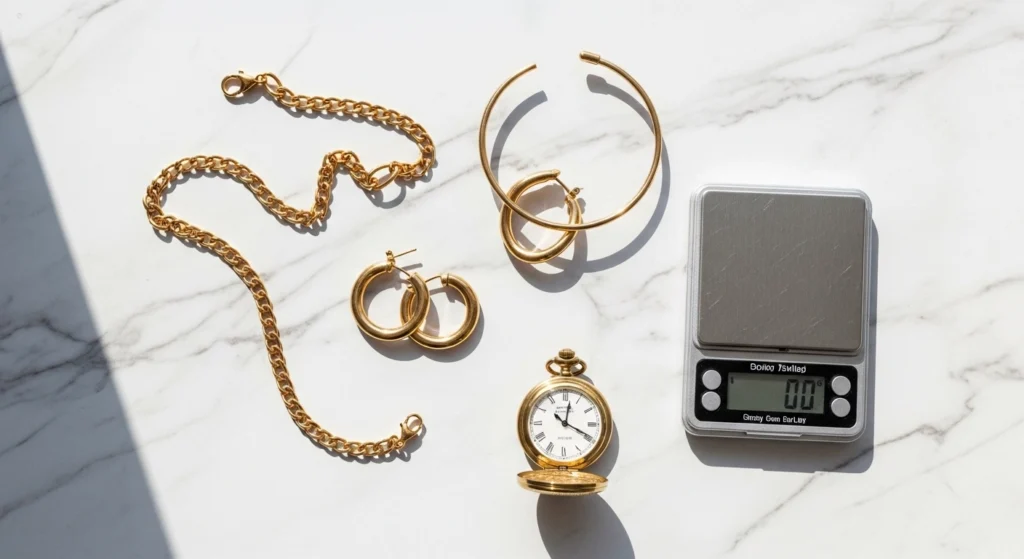
Gold-filled is not solid gold. It is also not the same as gold-plated. In gold-filled objects, real gold is bonded to a base metal, normally brass, through heat and pressure. It is fused to the surface and will not easily wash away like the coating applied through electrolysis.
The United States law stipulates that there should be at least 1/20th of the object’s weight in gold for an item to qualify as gold-filled. This amounts to 5%. The gold layer itself is real karat gold, which means it contains recoverable fine gold. That is why gold-filled scrap has actual monetary value, unlike gold-plated scrap, where the gold layer is too thin to refine economically.
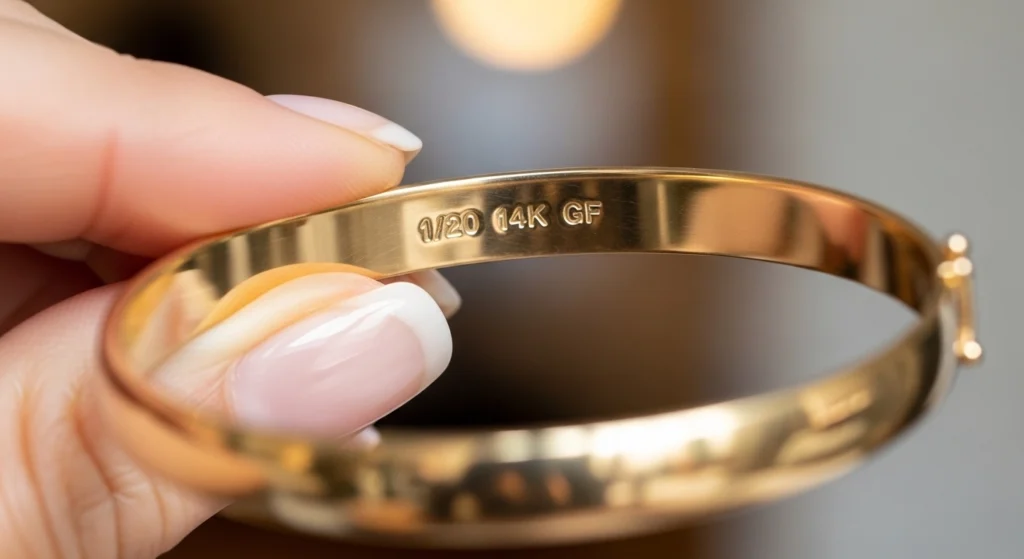
The hallmark on a gold-filled piece tells you two things: the karat of the gold layer and the ratio of gold to base metal. A stamp that reads 1/20 14K GF, for example, means the gold layer is 14 karat gold and makes up 1/20th of the item’s total weight. Understanding this stamp is the first step in using any gold karat guide or scrap calculator accurately.
It is incredibly important not to confuse gold-filled items with those that have a microscopically thin gold platted scrap value.
How to Use the Gold-filled Scrap Calculator
The calculator at the top of this page does the math for you. Here is what each input means and how to fill it in correctly.
Step 1: Enter the Gold Karat of the Alloy
The karat options are 9K, 10K, 12K, and 14K. This refers to the purity of the gold layer bonded to the base metal, not the purity of the whole item. A 14K layer means the gold in that layer is 58.5% pure fine gold. A 9K layer is 37.5% pure. Selecting the wrong karat here will throw off your entire calculation. Check the hallmark carefully before entering this value. If you are unsure how karat purity works, the gold karat guide covers the full breakdown.
Step 2: Enter the Gold to Brass Ratio
The ratio options are 1/5, 1/10, 1/20, and 1/50. This tells you what percentage of the item’s total weight is the gold alloy layer. A 1/20 ratio means the gold layer is 5% of the total weight. A 1/10 ratio means it is 10%. The most common type you will encounter in modern jewelry is 14K/20, meaning a 14 karat gold layer that makes up 1/20th of the weight. Vintage pieces, especially pocket watch cases and older chain necklaces, often carry a 1/10 ratio, which means more gold per gram.
Step 3: Enter the Scrap Weight in Grams
Weigh your item on a digital jewellery scale. Use grams for accuracy since the calculator works in metric weight. If you are weighing a pocket watch, weigh only the case and not the movement inside, as the movement adds weight without contributing to the gold content. Once you enter the weight, the calculator shows you two outputs: the net weight of fine gold in your item and the current dollar value based on the live gold price. For a full walkthrough of the calculator fields, see the ” How to use gold scrap calculator guide.
Can You Sell Gold-filled for Scrap?
Yes, you can. Gold-filled jewellery contains enough recoverable gold to make selling it for scrap worthwhile, which is something you simply cannot say about gold-plated items. Specialist refiners and certain precious metal buyers actively purchase gold-filled scrap because the gold content justifies the processing cost.
That said, not every jewellery buyer or pawn shop deals in gold-filled material. You need to look specifically for gold-filled scrap buyers who understand the material and have the refining capacity to process it. Showing up at a general buyer without knowing your item’s hallmark or weight puts you at a disadvantage.
Also worth noting: scrap value is not always the highest value. Some gold-filled pieces, particularly vintage or branded jewellery, are worth more intact than melted. More on that later in this guide. For now, check the current gold scrap prices so you know what the market looks like before you walk into any conversation with a buyer.
How to Read gold-filled Hallmarks
The hallmark is the most important piece of information you have before entering anything into a scrap gold-filled calculator. Get this wrong, and the value you calculate will be wrong too.
Here are the most common stamps you will find:
Hallmark | What It Means |
1/20 14K GF | The gold layer is 14K, making up 5% of the total weight. Most common in modern pieces. |
1/10 12K GF | The gold layer is 12K, making up 10% of the total weight. Common in vintage jewellery. |
12K GF | The gold layer is 12K; the ratio may vary. Often found on mid-century pieces. |
RGP / Rolled Gold Plate | Older standard with a thinner gold layer. Lower gold content than standard gold-filled. |
1/20 18K GF | The gold layer is 18K, making up 5% of the total weight. Less common but higher purity. |
Look for the hallmark on the clasp of necklaces and bracelets, inside the shank of rings, on the back of pendants, and inside the case back of pocket watches. On older pieces, the stamp can be faint or partially worn. If you cannot read the hallmark clearly, do not guess. Take the piece to a professional for acid testing or XRF analysis before calculating anything.
Because they are layered over brass, filled items will never reach the high spot prices discussed in our gold scrap vs bullion value article.
Gold-filled Scrap Value: What Drives the Price?
Knowing the formula is one thing. Understanding what actually changes the final number is another.
The Live Gold Price
Gold-filled scrap value moves directly with the spot price of gold. When gold is trading higher, your scrap is worth more. The calculator on this page uses the current gold price in US dollars per gram, so the output reflects real market conditions. You can also check gold scrap vs bullion value to understand how scrap pricing compares to buying physical gold.
The Weight of the Piece
Heavier items yield more fine gold. A chunky men’s rope chain or a vintage pocket watch case will produce a much higher payout than a lightweight pair of earrings. Chains, bangles, and watch cases are consistently the most valuable categories in gold-filled scrap recycling because of their weight.
The Hallmark and Ratio
A 1/10 piece contains roughly twice the gold content of a 1/20 piece at the same total weight. This is why vintage items with 1/10 stamps often attract stronger offers from gold-filled scrap buyers. Always confirm the ratio before assuming your piece is a standard 1/20.
Condition
Condition matters less for scrap than it does for retail. A broken chain, a cracked bangle, or a clasp that no longer closes all carry the same refining value as a perfect piece of the same weight and hallmark. Where condition starts to matter is when you are deciding whether to scrap or sell intact.
Gold-filled Pocket Watch Scrap Value
Pocket watches deserve their own section because they come up so often, and people consistently underestimate what they are worth, both as scrap and as collectables.
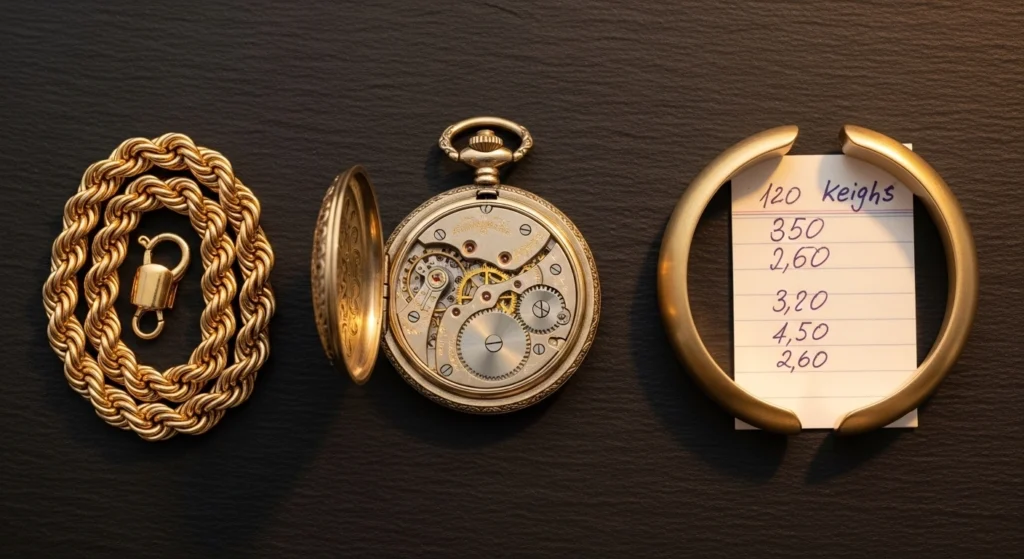
Most gold-filled pocket watch cases from American manufacturers carry a 1/10 hallmark. That means 10% of the case weight is karated gold, usually 14K or 10K. Compare that to a standard 1/20 necklace, and you can see immediately why pocket watch cases are among the more valuable items in gold-filled scrap recycling.
Before you scrap a pocket watch, check the inside of the case back for the maker’s name. A pristine example in working condition with a clean dial might be worth considerably more to a collector than the gold in the case. Do the research first. Then decide.
Where to Find Gold-filled Scrap Buyers
When looking for buyers, confirm that they specifically purchase gold-filled items and not just solid gold or plated pieces. A buyer who does not understand the difference between 1/10 and 1/20 material is not the right buyer for your scrap.
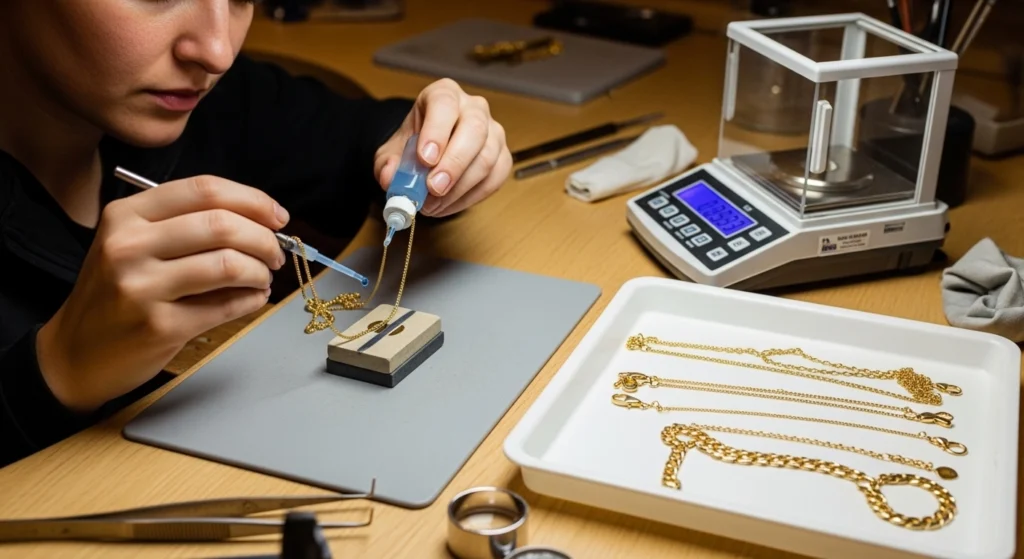
Good buyers will test your items before making an offer, either with acid, an electronic tester, or XRF analysis. They will weigh pieces in front of you. They will explain the calculation they are using and show you how they arrived at the price. If a buyer cannot do these things, that is a problem.
Refining Gold-filled Scrap: How It Works
When gold-filled scrap buyers purchase your material, it goes to a specialist refiner. The refining process strips the gold layer from the base metal, melts it down, and purifies it to fine gold. This requires volume and specialist equipment, which is why not every gold buyer handles gold-filled material.
For sellers, this means two practical things. First, small quantities sometimes attract lower per-gram offers because they fall below the minimum thresholds that make processing efficient for refiners. If you have only a few grams of material, combining items before selling can improve your offer. Second, gold-filled scrap recycling is a legitimate end-of-life option for broken or completely unwearable jewellery. The gold in those pieces does not disappear just because the setting is damaged.
Should You Scrap or Sell Your Gold-Filled Jewellery?
This is the question that matters most. Use the scrap value calculation as a floor, not a ceiling.
Scrap the piece if it is broken beyond repair, if the hallmark is worn to the point of being unreadable, if it has no maker’s marks or collectible appeal, or if it is too damaged to wear. In these cases, scrap gold-filled jewelry value is the realistic number you will get.
Sell it as jewelry if the piece is intact and wearable, if it shows strong vintage styling that appeals to collectors, or if the design is desirable in the current resale market. Necklaces, chains, and bangles in good condition regularly sell for more than their scrap value. Earrings and lightweight beads tend to sit closer to scrap value because demand is narrower.
Check gold scrap prices before making your decision so you know exactly what the scrap floor looks like for your specific piece.
Frequently Asked Questions
How much is gold-filled scrap worth per gram?
The price per gram depends on the karat, the gold-to-brass ratio, and the current spot price of gold. Standard 14K/20 material typically pays between one and three dollars per gram through specialist buyers.
Is gold-filled worth scrapping?
Yes, it is worth scrapping if the pieces are damaged or unwearable. Unlike gold-plated items, gold-filled material contains a thick enough gold layer to make refining economically worthwhile.
How do I identify gold-filled jewellery before selling?
Look for hallmarks on clasps, ring shanks, pendant backs, and pocket watch case backs. Common stamps include 1/20 14K GF, 1/10 12K GF, and 12K GF. If the stamp is worn, take the piece to a professional for acid testing or XRF analysis.
What is the scrap value of 1/20 14K gold-filled?
A 1/20 14K gold-filled item contains approximately 2.9% fine gold by total weight. At 100 grams, that is roughly 2.9 grams of fine gold. Multiply that by the current gold price per gram to find the gross value.
Can I sell broken gold-filled jewellery for scrap?
Absolutely. Condition has no bearing on refining value. Broken chains, bent bangles, cracked pendants, and damaged earrings all contain the same gold content as intact pieces of the same weight and hallmark. Gold-filled scrap buyers purchase damaged material regularly.
What is the difference between gold-filled and gold-plated scrap value?
Gold-filled scrap has real, recoverable value because the gold layer is mechanically bonded and substantially thick. Gold-plated scrap generally has no meaningful refining value because the electroplated coating is only microns thick.
Is vintage gold-filled jewellery worth more as scrap or as a collectable?
Vintage items from named makers, watch cases with collector appeal, and well-preserved mid-century jewellery often sell for more than their intact value, even at scrap value. Always research the maker and condition before deciding.